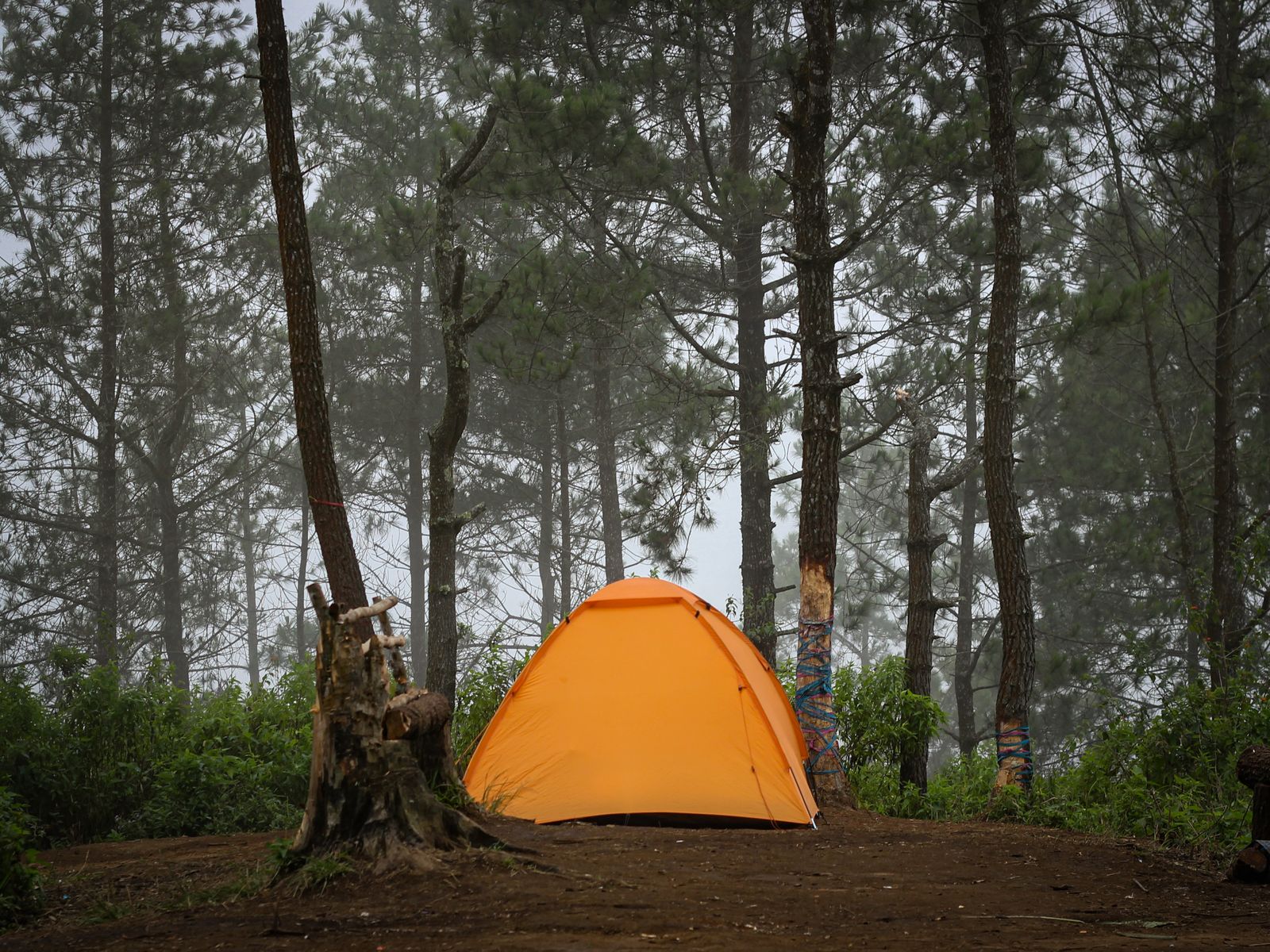
Fall is the best camping season of the year. Additionally, it humbles the most people.
The bugs are gone, the crowds thin out, and the woods finally smell like fall.
Afterward, the sun drops at 6:30. Next, the temperature falls twenty degrees in three hours. Meanwhile, gear that worked fine in July stops working.
Ultimately, these essentials are the pieces we rely on at The Hunt HQ. They decide whether you sleep through the night. Alternatively, you may sit up in your truck with the heater running.
We are a veteran-owned outfitter. That means we care less about what looks good on a shelf and more about what still works on night three when everything is damp.
1. A sleeping bag rated colder than the forecast
Here is the part most people get wrong. The number on the bag is not a promise. Lab-tested EN and ISO ratings give a bag two numbers: a comfort rating, which is the temperature where a cold sleeper stays comfortable, and a lower limit, which is where a warm sleeper stays comfortable (REI). Brands typically print the comfort rating on women’s bags and the lower limit on men’s bags, so two bags with the same number on the tag are not always the same bag.
Worse, the number in the product name is often rounded. REI points out that a bag sold as a “15” might actually test at an 18°F lower limit (REI).
Our rule: buy at least 10 to 15 degrees colder than the forecast low. A mummy-style bag with a hood traps the heat that otherwise escapes off your head (The Wilderness Society). You can always unzip a bag that is too warm. You cannot add insulation you did not bring.
2. A sleeping pad with the right R-value
If you are going to spend money on one thing this fall, spend it here. The ground pulls heat out of you all night, and no bag can fix a cold pad.
Sleeping pads are rated by R-value, and REI’s guidance is straightforward.
Under 2.0 is warm weather, 2.0 to 3.9 is cool, 4.0 to 5.4 is cold, and 5.5 or higher is extreme cold.
For camping, a higher R-value improves warmth and comfort.
Here is a detail almost nobody knows: sleeping bag ratings assume a pad with an R-value of 4.
If your pad is 1.5, your 20-degree bag is not a 20-degree bag anymore.
R-values also stack. Two pads add together, so throwing a cheap closed-cell foam pad under your air pad is the fastest warmth upgrade for the least money (REI).
3. Three layers, and none of them cotton
Layering is not about wearing more. It is about wearing the right three things: a moisture-wicking base layer, an insulating mid layer like fleece or down, and a windproof, waterproof shell.
Leave the cotton hoodie at home. Cotton holds sweat against your skin, and wet fabric in 45-degree air is how a good trip turns into a medical situation. The CDC notes that hypothermia can set in at temperatures above 40°F when you get chilled from rain or sweat (CDC). Fall is dangerous precisely because it does not feel dangerous.
4. A headlamp, plus a backup light
You lose daylight fast in the fall, and you lose it earlier every week. Plan to be at camp with the tent up before sunset, and cook before dark instead of after (The Wilderness Society).
Then bring two lights anyway. A headlamp keeps your hands free for the jobs that actually happen after dark: splitting kindling, filtering water, finding the one tent stake you dropped. Fresh batteries, and a spare set in a pocket, not the bottom of a pack.
5. A warm hat or balaclava for sleeping
Cheap, light, and the single most underrated item on this list. If your head is cold at night, put on a balaclava instead of burying your face in your bag. Breathing into the bag adds moisture that kills its insulation, and damp down does not loft (The Wilderness Society).
Same source has another good one: don’t work up a sweat right before bed. Going into a bag damp is a long night.
6. Insulated boots and two extra pairs of socks
Fall means wet ground, heavy dew, and frost in the morning. Wet feet at dawn set the tone for the whole day. Bring a dedicated dry pair for sleeping only, and never wear them outside the tent.
7. Rain gear you actually trust
A 40-degree day with rain is colder than a 30-degree day that is clear. Pack the shell even when the forecast looks clean, because fall forecasts are guesses and your ability to stay dry is not optional.
8. Hot food, hot drinks, and more fuel than you planned
Cold weather burns calories, and warm liquid raises your core temperature (CDC). Canisters also perform worse as temperatures drop, so bring more fuel than your summer math says you need. Skip the alcohol at night: it feels warm and does the opposite of what you want (CDC).
9. Know the warning signs before you need them
Shivering, clumsy hands, slurred speech, confusion, and drowsiness are the ones to watch. If someone’s body temperature drops below 95°F, that is a medical emergency, and low core temperature affects the brain first, meaning the person in trouble is often the last to recognize it (CDC). Get them into shelter, strip the wet layers, and warm the chest, neck, head, and groin.
That last point is the whole reason we sell field gear instead of decor. The right kit is not about comfort. It is about margin.
Pack it once, pack it right
Sleep system first, layers second, light and fuel third. Get those three right and fall camping stops being a gamble and goes back to being the best two months of the year.
Shop fall camping essentials at The Hunt HQ — veteran-owned, field-tested gear for hunting and camping.